
Stellarator Tokamak Hybrid Fusion
Magnetic confinement fusion of an H mode plasma involving MHD optimization and PID LQR real time feedback control of neoclassical turbulence with pixelated Hall effect sensor B field coil arrays is the future. Combining the best of all worlds, tokamak current drive and stellarator fields, the addition of controlling coils will mitigate transport and dictate shape.
New ideas involving edge localized mode (ELM) removal and negative triangularity (NT) require better plasma shaping. NT is an operational framework designed with controlling coils in a passive system. Active feedback with sub-centimeter Rayleigh Jeans and Kelvin Helmholtz instability control, data access, and communication (CODAC) 3D to 2D deconvolution will be developed with sensors picking up magnetic field. In this sense, pixelated quantum sensors, Hall effect sensors, or Aharonov-Bohm sensors combined with laser interferometry evolve in a complex system where plasma field and density are measured and controlled with nanosecond overshoot in the LQR circuit. PID systems are also attractive. General Physics plans conduct research into both PID and LQR feedback in the near future and will likely develop something of a stellarator tokamak hybrid with pixelated controlling coils with A.I. in the CODAC operating with optimized MHD, feedback programming, and sensor readouts.
NT promises ELM removal and this new paradigm will be addressed with the pixelated plasma shaping. General Physics plans to address high Z impurity sputtering, pellet injection, muon catalysis, runaway electron artifacts, and disturbances. Running WarpX, GENE, BOUT++, Tango, Fusion GPT, EIRENE, and CATIA b spline multiplicity simulations with Monte Carlo MD PIC FEM analysis will also allow General Physics to simulate the plasma for better coil and pixelated magnet design.
PID and LQR Control
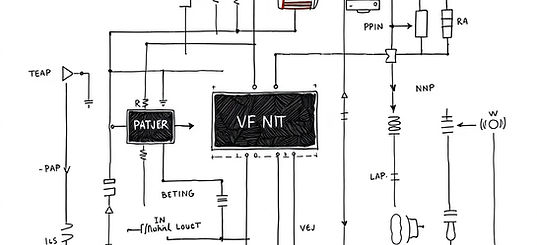
Hall effect sensors on the major radius of the central annulus and walls of the magnetic confinement device will create calibrated inputs for proportional integral derivative and linear quadratic regulator circuit elements. Thus, a sensitive feedback loop will shape the plasma and mitigate eigenmodes in the MHD optimization Lagrangian. Recent discussion in plasma physics address negative triangularity (NT) as a mode with density and field parameters controlled by effective coil current setups. What is needed is a way to calibrate the coils with a laminar initial H mode condition for ignition in the stellarator tokamak hybrid with pixelated feedback magnetics. General Physics is also interested in the Aharonov-Bohm field sensors in addition to the Hall sensor in the PID LQR circuits. Investigation into laser interferometry is also ongoing for density analysis and 2D to 3D deconvolution.
Partnerships with APS, ANS, NASEM
Partnerships with professional organizations are happening. General Physics hopes to work with the NRC to guide market efficiency in reactor design, reducing governmental costs, industrial waste, and loss of productivity. Efficiency is the goal of General Physics and a global supply chain is required with the major nation-states of the world contributing time and effort to the cause. General Physics fusion division is working with the DPP, FIA, IAEA, NSF, and university partners to develop strategic test facilities and experiments to guide fusion research into the proper stepwise incremental attainable goal oriented paradigm of the scientific endeavor. Global cooperation is a soft power goal that was Eisenhower's Atoms for Peace design, and fusion promises a utopia where countries and multinationals make peace to develop a novel and highly advanced energy source to power everything from new A.I. data centers, to next generation EVs, to the electronics and advanced consumer products of the n+1 generation. Fusion is the philosophy of coming together and it means building something with an appetite from construction.

Human Resources
General Physics' team of scientific experts come from countries and organizations all over the world. For more information, get in touch and contact us to find someone who can consult with you. We are electronically connected and digitally advanced with meetings coordinated all over the world. General Physics can meet not only the fusion challenge, but bespoke bid, RFP, RFQ, cost engineering, and project management tests.
